
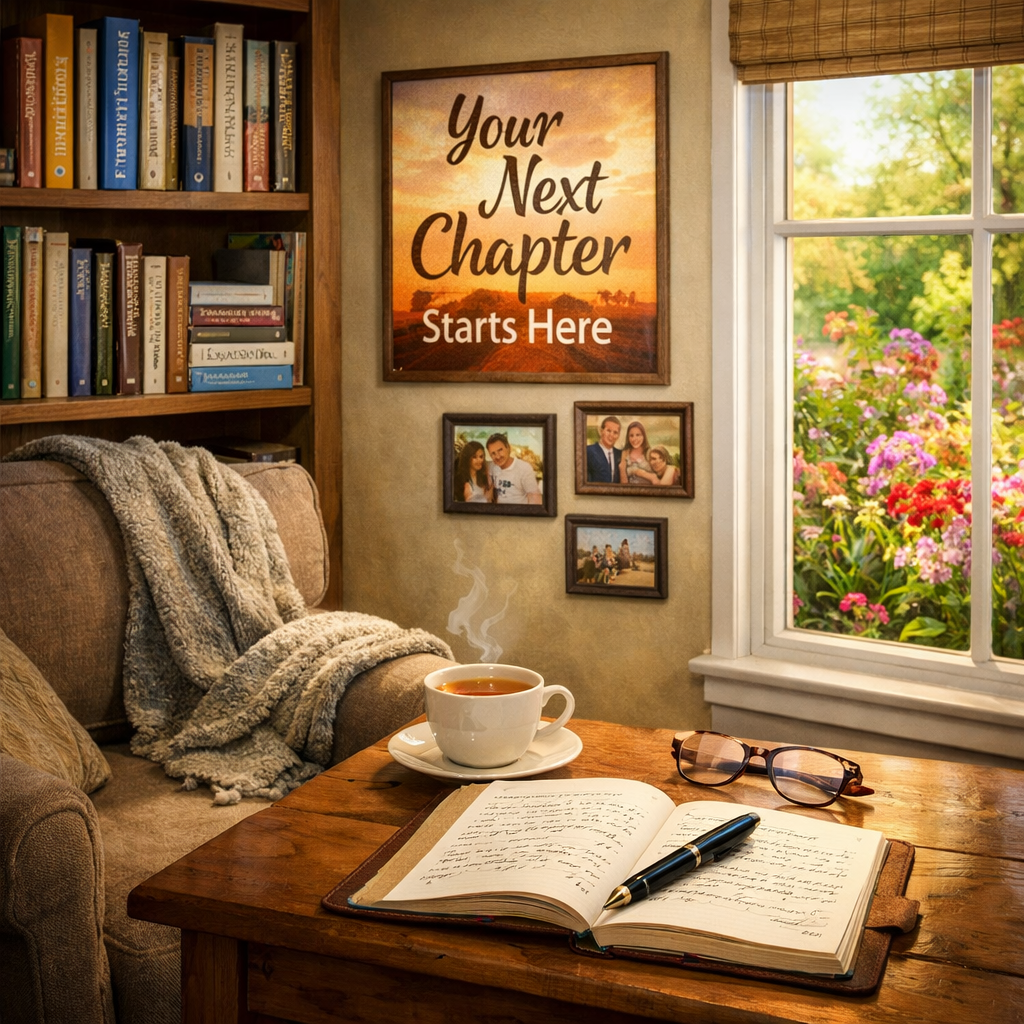
Nobody hands you a manual for the years after your career ends. One day there's a schedule, a commute, a reason to be somewhere by 8am. Then there isn't. What you do with that blank space — how you structure your money, your living situation, your days — ends up mattering more than most people anticipate while they're still busy working toward it.
Stay, Downsize, or Move — and Why It's Not as Simple as It Sounds
People tend to default to staying put because change is hard. That's not a judgment, it's just true. But "I'm comfortable here" and "this place still works for me in 10 years" aren't the same statement. A big house made sense when kids lived in it. Stairs felt fine at 60. Yard work was enjoyable, once.
Worth asking honestly: is staying because it's right, or because it's easier than deciding?
What the Options Actually Look Like
Every choice has a flip side. Here's a fast comparison before going deeper on any one path.
|
Option |
Real Upside |
Real Downside |
|
Staying put |
You know the space, the neighbors, the routines |
Could need expensive changes as health shifts |
|
Downsizing |
Harder emotionally than most people expect |
|
|
55+ community |
Social life built in from day one |
Fees, rules, and less control over your environment |
|
Moving near family |
Support when you actually need it |
Privacy goes down, autonomy often follows |
|
Assisted living |
Care is there before you need to scramble for it |
Expensive, and a big psychological adjustment |
What's Already in Your Home Might Surprise You
Decades of mortgage payments add up. A lot of older homeowners are sitting on significant equity and treating it like it's locked away until they sell. It's not. That value can cover a first-floor bathroom renovation, a medical bill that insurance didn't fully cover, or a decision to work part-time instead of full-time during a transition year.
Looking into the best home equity lines before you actually need the money is smart — you find out what's available without the pressure of a deadline. Terms vary a lot across lenders, so comparison shopping with a financial advisor in your corner is worth the time. Lenders typically look at four things: how much equity you've built up, your credit history, whether your income is stable, and how your existing debt stacks up against what you earn.
Building a Day That Doesn't Just Disappear
Retirement has this funny way of making time feel both abundant and weirdly shapeless. People who thrive on busy schedules sometimes find themselves at 2pm on a Tuesday with no idea what to do with themselves. It passes for some. For others, it quietly compounds into something heavier.
The habits that seem to actually hold a day together:
Writing Helps More Than People Expect
Big transitions have a way of creating mental static — you feel like something needs to change but can't quite name what. Thinking about it in loops doesn't usually help. Writing does. Not because it's therapeutic in some abstract sense, but because putting words on paper forces your brain to actually finish a thought instead of cycling through the same half-formed ones.Create Write Now offers guided journaling tools designed around exactly this kind of self-examination during major life shifts. The resources aren't generic — they're built around reconnecting with values and making clearer decisions. Spending 20 minutes a day writing seriously about what you want from the next stage is more useful than most people think it'll be before they try it.
Before Making Any Big Decisions
Sit with these before committing to anything that's hard to reverse.
Questions People Ask When They're Actually in This
When should I start planning seriously?
Late 50s is not too early, and for a lot of people it's already later than ideal. The value of early planning isn't that you'll have all the answers — it's that you'll have time to adjust when your first answers turn out to be wrong. Starting mid-transition is still better than not starting, just with less cushion.
How do I figure out whether to stay in my home or leave?
Price out what it would realistically cost to keep your home functional and safe for 20 more years, then stack that against moving. Include the social dimension too — isolation is a real cost, even if it doesn't show up in a budget spreadsheet. Your doctor and a financial advisor can together give you a more complete picture than either one alone.
Does routine actually matter or is that overstated?
The research is pretty consistent that structure protects mental health in older adults more than people expect. The trap is confusing structure with a packed calendar — you don't need to be busy, you just need a few fixed points in the day that keep time from blurring. Small anchors make a bigger difference than they seem like they should.
How do I make my savings actually last?
Work with a certified financial planner who will model real scenarios, including bad ones, not just averages. Review the plan every single year because life shifts and so do markets. And don't under budget for healthcare — it's consistently the expensethat catches people off guard.
Can I use home equity without selling the house?
Yes, several products let you borrow against equity while staying put, and they work differently from each other in ways that matter long-term. Don't pick one based on a single conversation — compare, ask a HUD-approved housing counselor for a neutral read, and understand what you're agreeing to before you sign.
What do I do if I just feel lost once I stop working?
Give it a few months before deciding something is wrong. But if the blankness persists, it's usually not a purpose problem — it's a structure and connection problem. Volunteering, a class, a creative project with other people involved, or honest journaling about what used to make work feel worth doing are all better entry points than waiting for motivation to show up on its own.
The people who land well in this next stage aren't the ones who figured everything out in advance. They're the ones who stayed curious about what they actually wanted and adjusted when the first plan didn't hold. Pick one thing you've been avoiding thinking about. Start there.
About the Author
Rhonda Underhill loves going for nature walks, kayaking, and playing tennis. Her passion for health and fitness developed later in life after her husband, Pete, experienced a heart attack at the age of 54. Since then, they have both committed to a healthier lifestyle. Rhonda created getwellderly.com to share her journey and inspire others in their age group to prioritize diet and exercise. Now 60, Rhonda and Pete are training for their first marathon.
Leave Comment