
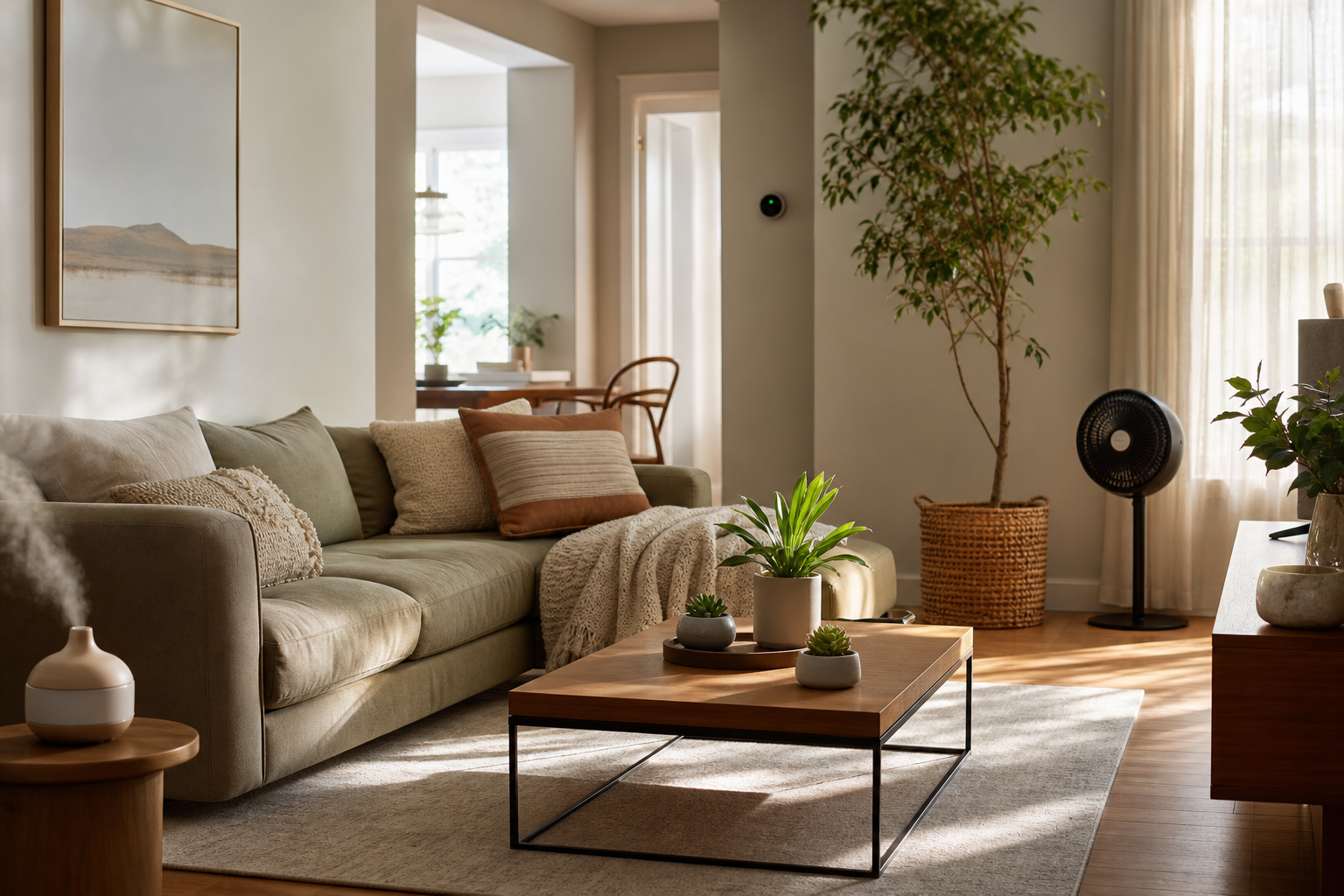
Busy parents juggling work and wellness, remote workers logging long hours indoors, and renters trying to feel settled often hit the same wall: the space they live in quietly drains energy instead of restoring it. Between harsh lighting, stale air, and constant low-level clutter stress, mental and physical health benefits can feel out of reach without a big budget or a full renovation. Health-focused home renovations reframe home improvement for wellness as practical, realistic well-being enhancement, small, intentional shifts that support healthier routines and calmer days. Healthy living spaces can make feeling better feel simpler.
Understanding Wellness Design at Home
Wellness design means shaping your home so it actively supports how you feel and function. Lighting, indoor air quality, natural ventilation, and calming finishes are not just style choices. They can influence sleep timing, mood stability, focus, and everyday comfort.
This matters because your body reacts to your environment all day, even when you are not thinking about it. The growing wellness economy reflects how many people are prioritizing spaces that reduce friction and support healthier routines.
Think of your home like a “second nervous system.” Bright blue light late at night can keep your brain alert, while stale air can leave you sluggish. Efforts to improve ventilation and filtrationshow how airflow upgrades can be a real health lever. Clean air and steady temperature start with smart HVAC checks and targeted replacements.
Upgrade HVAC for Cleaner Air and Steadier Comfort
Wellness-focused design works best when the air you breathe and the temperature you live in feel reliably good, day after day. Upgrading your HVAC system, along with keeping it properly maintained, can make a noticeable difference in indoor air quality by improving filtration and airflow, while also helping your home hold a more consistent temperature. The payoff is more than comfort: better regulation can reduce humidity swings and cut down on allergens circulating through your rooms, which supports easier breathing and a calmer, more restful environment. If you discover worn or failing components along the way and need to order replacements, prioritize reputable suppliers so you get parts that are high quality, durable, and truly compatible with your system, like these furnace and AC parts.
Wellness Upgrade Checklist You Can Finish This Week
This checklist turns wellness ideas into simple, budget-friendly moves you can actually complete. Pick two to start, then build momentum as you notice better focus, sleep, and ease at home.
✔ Confirm filter size and set a monthly replacement reminder.
✔ Set thermostat schedules for steady daytime and sleep temperatures.
✔ Add a quiet fan or white-noise option for nighttime sound control.
✔ Seal drafts around doors and windows to reduce hot and cold swings.
✔ Swap harsh bulbs for dimmable warm lighting in evening spaces.
✔ Choose low-VOC paint and adhesives for your next refresh.
✔ Clear cluttered walkways to support calmer movement and safety.
Small upgrades, repeated, make your home feel like a daily reset.
Smart Home Wellness Upgrades: Common Questions
Q: What if I only have a small budget for smart upgrades?
A: Start with changes that reduce daily friction, like a smart thermostat schedule or a basic air-quality monitor. Set a firm cap, then choose one “now” upgrade and one “later” upgrade so you still build momentum. Watching utility use and comfort over two weeks helps you decide what truly earns its spot.
Q: How do I know which upgrades are actually “worth it”?
A: Define “worth it” as fewer headaches, better sleep, safer movement, and lower ongoing costs, not just a flashy gadget. If resale matters, prioritize improvements with measurable payoff like a closet renovation that can show 83% ROI. Choose options you will use daily, because consistency is where the wellness gains come from.
Q: What sustainable materials help health without complicating the project?
A: Look for low-VOC finishes, formaldehyde-free cabinetry, and durable flooring that is easy to clean. For insulation and sound comfort, cork insulation is a renewable and recyclable material that can support quieter, more stable rooms. Ask contractors for product sheets so you can compare emissions and maintenance.
Q: Should I DIY smart home installs or hire a pro?
A: DIY is great for plug-in devices, bulbs, and simple sensors, especially if you can follow step-by-step instructions. Hire a licensed pro for anything involving your electrical panel, hardwired switches, or HVAC changes. A safe install protects both your health goals and your home.
Q: When is the best time to upgrade for the least stress?
A: Choose a low-demand week and tackle one area at a time, like the bedroom first for faster sleep benefits. Order materials in advance and plan a clean-up routine so dust and clutter do not linger. A calm timeline is part of the wellness upgrade.
Build Healthier Living With One Smart Home Upgrade
It’s easy to want a healthier home while feeling stuck between cost, complexity, and the fear of choosing the “wrong” renovation. The most reliable path is a wellness-first mindset: prioritize comfort, clean air, restorative light, safer surfaces, and easy-to-maintain systems so smart home upgrades support daily habits, not just convenience. Over time, these thoughtful design choices reduce friction, lift mood, and make it simpler to move, rest, and focus, creating holistic home well-being that lasts. Small home changes, repeated consistently, create big health returns.
About The Author
Janet Campbell is the creator of Elder Spark, which aims to help seniors find resources and motivation to stay fit in their golden years
Leave Comment